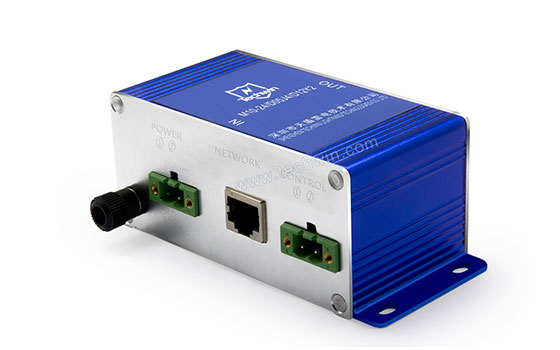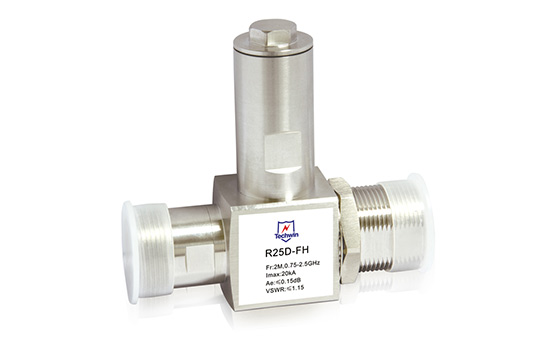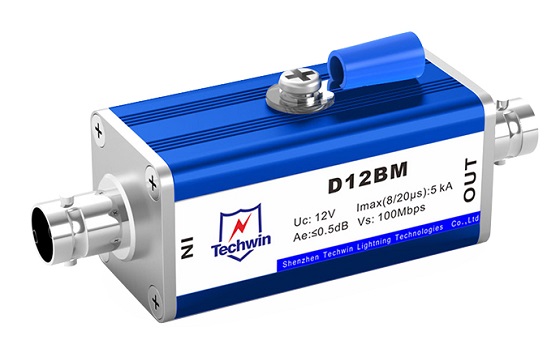

Since the energy of lightning strikes is very huge, it is necessary to gradually discharge the energy of lightning strikes to the ground through a hierarchical discharge method. The first-level lightning surge protector can discharge direct lightning current, or discharge the huge energy conducted when the power transmission line is directly struck by lightning. For places where direct lightning strikes may occur, CLASS-1 lightning protection must be carried out.
The second-level lightning surge protector is a protection device for the residual voltage of the front-level lightning surge protector and the induced lightning strikes in the area. When the front-level has a large lightning energy absorption, there is still a part of the equipment or the third-level surge protection product. As far as the device is concerned, a considerable amount of energy will be transmitted, and it needs to be further absorbed by the second-level lightning surge protector. At the same time, the transmission line passing through the first-level lightning surge protector will also induce lightning electromagnetic pulse radiation LEMP. When the line is long enough, the energy of the induced lightning becomes large enough, and a second-level surge protector is needed to further discharge the lightning energy.
Generally, this level industrial power surge protector should have a maximum impact capacity of more than 100KA per phase, and its limit voltage is less than 1500V. So this kind of protector is called CLASS 1 power surge protector. These electromagnetic lightning surge protection products are specially designed to withstand the large currents of lightning and induced lightning strikes and to attract high-energy surges, which can shunt a large amount of surge currents to the ground. They only provide limited voltage (when the inrush current flows through the power surge protector, the maximum voltage that appears on the line is called the limited voltage) is medium-level protection, because CLASS 1 protectors mainly absorb large surge currents. They alone cannot completely protect the sensitive electrical equipment inside the power supply system.
The first-level lightning surge protector can prevent 10/350μs, 100KA lightning waves and reach the highest protection standard specified by IEC. The technical reference is: the lightning flow rate is greater than or equal to 100KA (10/350μs); the residual voltage value is not greater than 2.5KV; the response time is less than or equal to 100ns.
The purpose is to further limit the value of the residual surge voltage through the first-stage surge protector to 1500-2000V, and implement equipotential connection for LPZ1-LPZ2.
When the power surge protector output by the distribution cabinet circuit is the second-level protection, it should be a voltage-limiting power surge protector, and the current capacity should not be less than 20KA. And it should be installed at the branch distribution point that supplies power to important or sensitive electrical equipment. These surge protection products better absorb the residual surge energy of the surge arrester at the user's power supply entrance, and have an excellent suppression effect on transient overvoltage. The maximum impact capacity of the power surge protector used here is more than 45kA per phase, and the limit voltage should be less than 1200V. Therefore, it is called CLASS 2 power surge protector.
The general user power supply system can achieve the second-level protection to meet the requirements of the operation of electrical equipment. The second-level power surge protector adopts class C protector for phase-to-neutral, phase-to-earth and center-to-earth full mode protection.
 Will a surge protector still work after a power failure? –Comprehensive Technical AnalysisApril 27, 2025Systematic maintenance ensures SPD reliability post-power failure.viewThe Importance of Power Surge Monitoring Devices: Safeguarding Your ElectronicsSeptember 11, 2023In today's digital age, we rely on electronic devices more than ever before. From smartphones and laptops to refrigerators and home entertainment systems, our lives are intertwined with electronic...viewTerms and definitions of IEC 61643-11: LOW-VOLTAGE SURGE PROTECTIVE DEVICES (2/2)December 8, 2022the professional explanation of main terms of surge protective devicesviewWhy Should Lightning Protection Systems Be Grounded?October 25, 2021We assume most people have a basic understanding of lighting protection system grounding, however, you may not be clear about why we have to use the lightning protection system grounding in the lighti...viewThe Role of Lightning and Surge Protection Devices in Biogas PlantsJuly 4, 2024In modern biogas facilities, biogas, as a clean and renewable energy source, is being widely used globally. However, for biogas plants, which process organic materials and produce biogas, the safe ope...viewHow Long is the Service Life of the Power Surge Protector SPD?February 17, 2023The internal components of the power surge protector SPD, such as gas discharge tubes, varistors, transient suppression diodes, etc., will have a certain impact on the performance when subjected to cu...view
 EN
EN
 jp
jp  ko
ko  fr
fr  de
de  es
es  it
it  ru
ru  pt
pt  ar
ar  vi
vi  th
th  ro
ro  bg
bg  nl
nl