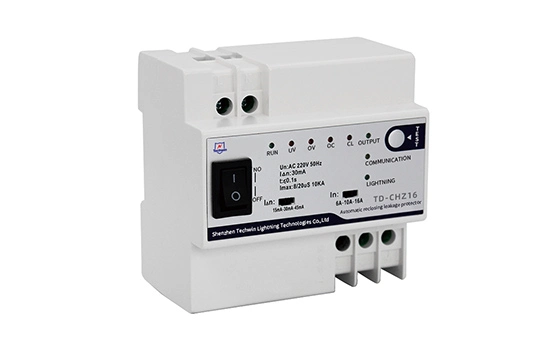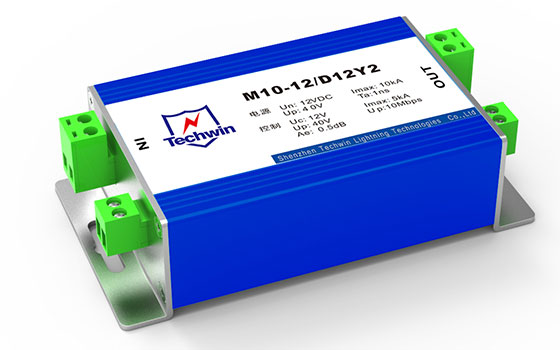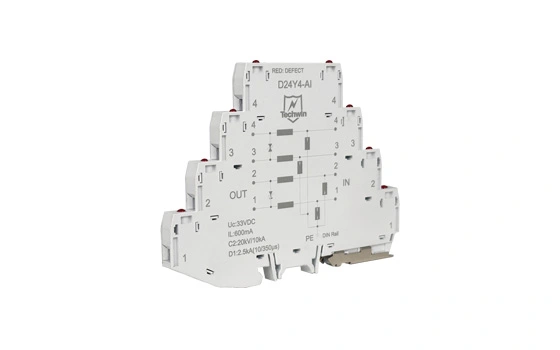

As lightning hazards pose increasing threats to buildings and electronic devices, Surge Protection Device for Lightning has become particularly important in modern buildings and power systems. This article will provide a detailed introduction to the functions of surge protection device for lightning and the selection criteria.
Protection Against Direct Lightning Strikes
The lightning surge protection device can effectively prevent the direct destruction of buildings or equipment caused by the strong currents induced by direct lightning strikes. They accomplish this by directing the lightning current into the ground, thereby protecting buildings and equipment from devastating damage.
Protection Against Lightning
The instantaneous charges released by lightning can alter the magnetic field around buildings, which can range from causing signal interference in electronic devices to completely paralyzing equipment systems. Surge protection device for lightning suppresses overvoltage to prevent lightning from interfering with and damaging electronic devices.
Protection Against Conducted Lightning
Conducted lightning can directly harm electronic devices through cables. Even if the building is not directly struck, the lightning can still cause equipment damage via the circuits. Surge protection device for lightning can effectively mitigate the impact of conducted lightning on power and communication lines.
Selection Based on Installation Location
Primary surge protection device for lightning: Installed at the junction of the building's external power supply line and the main distribution box (at the boundary of LPZ0A or LPZ0B and LPZ1 zones). These surge protection devices for lightning, tested under Class I or II conditions, are designed to withstand large current surges.
Secondary surge protection device for lightning: Installed in subsequent protection areas like the distribution box in electronic equipment rooms (at the boundary of LPZ1 and LPZ2 zones). These surge protection devices for lightning, tested under Class I1 or III conditions, are used for the secondary reduction of lightning current.
Fine Protection: For critically important electronic information equipment, surge protection device for lightning tested under Class II or III conditions should be installed at their power ports to ensure more precise voltage protection.
Selection Based on Power Supply Line Type
AC Power Supply Lines: Choose AC spd for lightning that fit within the appropriate voltage range and meet the rated voltage requirements of the equipment.
DC Power Supply Lines: Select a suitable DC spd for lightning according to the operating voltage of the equipment.
Selection Based on Protection Parameters
Protection Distance: The protection range of the surge protection device for lightning should cover the area where the equipment is located. An excessively long protection distance may reduce the protection effect.
Wire Length: When the line length between voltage switch-type and voltage-limiting surge protection device for lightning is less than 10 meters, a decoupling device should be installed to avoid unequal energy distribution.
Impulse Withstand Voltage: The protection level (Up) of the surge protection device for lightning should be less than the rated impulse withstand voltage value (Uw) of the protected equipment.
Functional Requirements
Select surge protection device for lightning with overcurrent protection and degradation indication features for easier maintenance and fault diagnosis. If the surge protection device for lightning has an automatic energy coordination feature, it can reduce the limitations imposed by installation location and line length.
Surge protection device for lightning is crucial for the safety of buildings and equipment, as its main functions include protecting against direct lightning strikes, lightning, and conducted lightning. When selecting surge protection device for lightning, it is important to consider factors such as installation location, power supply line type, protection parameters, and functional requirements to ensure that the surge protection device for lightning can effectively protect power lines and equipment from lightning surges.
 How Does a Surge Protective Device Work?July 3, 2024Surge Protective Device (SPD) is a device used to protect electronic equipment from power surges or transient voltages. They are connected in parallel with the load power circuit that needs protection...viewHarm of lightning to DCS system of nuclear power plant and key points of lightning protection designJuly 8, 2022Lightning is a kind of meteorological disaster that often occurs in most areas of our country. It has the characteristics of strong suddenness and great harm, and often brings very serious threats to ...viewPower Supply Surge Protection for Industrial Control PanelsJuly 3, 2024Power supply surge protection for industrial control panels is not just a recommended practice but an essential legal requirement, a mandatory measure to protect electrical systems. Typical control pa...viewAntenna Surge Protective Device for Cellular Base StationsJuly 3, 2024Currently, the world is experiencing significant changes, including planning and establishing new mobile radio sites, as well as revitalizing and expanding existing network infrastructure. In the era ...viewLightning Protection Scheme for Drone Ground Control Station - Focus on SPD ConfigurationOctober 31, 20251.Core Principle: Zoning and Staged ProtectionThe Ground Control Station (GCS)—whether a fixed building, shelter, or vehicle—must be treated as a system requiring multi-layered protection. Adhering ...viewIntroduction to Signal Surge Protector and Its Lightning Protection FunctionMarch 4, 2022A signal surge protector is a type of surge protection devices that is linked in series on a signal line to reduce transient over-voltages and deflect surge currents away from the signal line. Signal ...view
 EN
EN
 jp
jp  ko
ko  fr
fr  de
de  es
es  it
it  ru
ru  pt
pt  ar
ar  vi
vi  th
th  ro
ro  bg
bg  nl
nl