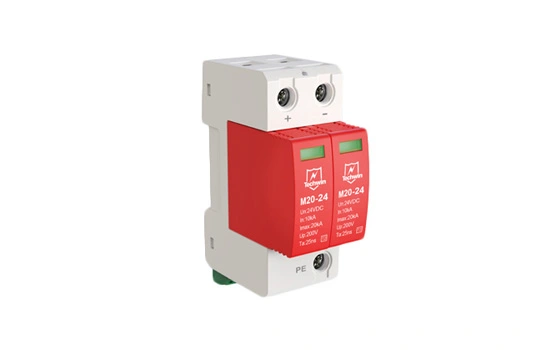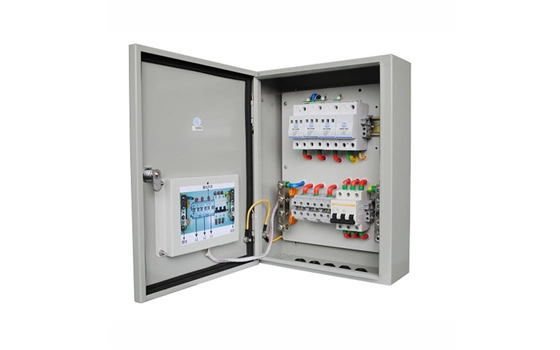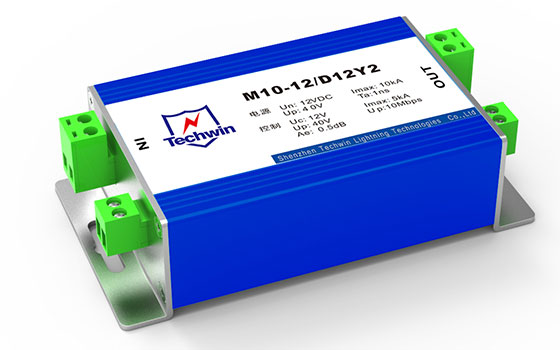

The discharge current is the most important parameter for selecting a surge protector, which symbolizes the ability of the surge protector to discharge lightning current and protect equipment. When defining the discharge current parameters of the surge protection device, the discharge current is divided into the nominal discharge current and the maximum discharge current.
In the relevant standards, for the pressure-limiting lightning arrester, use the lightning arrester to allow the maximum discharge current (waveform 8/20µs) to pass once, and allow the nominal discharge current (waveform 8/20µs) to pass 15 times to characterize the ability of the lightning arrester to discharge the lightning current. When choosing a lightning arrester, we must pay attention to the difference between the maximum discharge current and the nominal discharge current. Most lightning arrester manufacturers name their lightning arrester models based on the maximum discharge current. Many users of surge protectors do not notice the difference between the maximum discharge current and the nominal discharge current when choosing. Some users even regard the maximum discharge current as the most important basis for the selection of surge protectors, while ignoring the nominal discharge current. In fact, the national standard clearly stipulates that the nominal discharge current must be the main basis for selecting lightning protection devices. For lightning protection product models named after the maximum discharge current, it is necessary to check whether the nominal discharge current parameters meet the corresponding national standard requirements.
Different electrical grounding systems should use different surge protectors, and this is often overlooked by non-professional lightning protection users. The impact of different grounding systems on the selection of surge protectors can be divided into two aspects:The maximum continuous working voltage of the lightning arrester and the structural form of the lightning arrester. The maximum continuous working voltage refers to the maximum AC voltage rms or DC voltage that is allowed to be permanently applied to the lightning arrester, and its value is equal to the rated voltage. When the voltage applied to the lightning protection device is greater than the maximum continuous working voltage it can withstand, the lightning protection device will be damaged. If the maximum continuous working voltage is selected higher, the surge protector is not easy to be damaged when the voltage is unstable, but the residual voltage of the surge protector will be increased.
Due to the irregularity of the current lightning protection industry, many lightning protection manufacturers have not tested this project for their lightning protection devices, and this indicator is very important to the safety of lightning protection devices. It is one of the main indicators to measure the performance of lightning protection products. First, it needs to attract enough attention from customers.
The failure form of the voltage-limiting lightning arrester is a short circuit. When the lightning arrester with poor quality fails, it may catch fire and cause serious accidents. The national standard on the transient overvoltage characteristics of the lightning arrester is formulated to ensure that the lightning arrester will not cause fire and other safety accidents when it fails.
The transient overvoltage characteristic index requires the surge protector to apply a certain value of overvoltage (depending on the system), the duration is 200ms, and the test current is limited to 300A (effective value), the thin paper covered on the periphery of the surge protector during the test Or gauze cannot burn and catch fire. At the same time, when the power frequency voltage equal to the maximum continuous working voltage is applied for 1min, and the current does not exceed the effective value of 0.5mA, the tripping structure of the arrester will operate, and there should be an obvious, effective and permanent disconnection mark on the arrester.
The surge protection device is live after installation, so the national standard puts forward requirements for preventing direct contact, that is, when the surge protection device is installed and wired in normal use, the live parts should not be easy to touch. The lightning protectors currently on the market, including some well-known foreign brand lightning protectors, may also have defects in this indicator, and users should pay attention to them when choosing.
 The Difference Between Surge Protector and Lightning ArresterFebruary 17, 2023Lightning arresters and surge protective devices, as commonly used components in electrical equipment, have the function of preventing overvoltage, especially lightning overvoltage, but there are stil...viewThe Difference Between a Lightning Arrester and a Surge ProtectorDecember 8, 20211. What's a surge protection device (SPD)?A surge or spike refers to a transient over-voltage that is far larger than the specified operating voltage. In essence, it is a strong impulse with the d...viewBasic Components of Surge ProtectorAugust 10, 20221. The discharge gap of the surge protective deviceThe discharge gap of the surge protective device is generally composed of two metal rods exposed to the air and separated by a certain gap. One of th...viewIs Surge Backup Protector the Same As Surge Protector?March 13, 20231.The Role of Surge Backup ProtectorBefore the advent of surge backup protectors, the backup protection devices of SPD surge protectors typically used fuses or circuit breakers to separate the short-c...viewThe IEC standards of SPDAugust 11, 2023IEC standards refer to the International Electrotechnical Commission standards, which are globally recognized and accepted guidelines for electrical and electronic devices. Spd stands for Surge Protec...viewWhat are the differences in practical applications among the three types of SPD: voltage-limiting type, switching type, and composite type?February 2, 2024Surge Protective Devices (SPDs) are designed to protect electrical and electronic equipment from voltage spikes or surges. The three main types of SPDs are voltage-limiting type, switching type, and ...view
 EN
EN
 jp
jp  ko
ko  fr
fr  de
de  es
es  it
it  ru
ru  pt
pt  ar
ar  vi
vi  th
th  ro
ro  bg
bg  nl
nl